
Case study — Youhonk · Mobility
Brought up to speed.
Youhonk is Pune's vehicle-service marketplace — compare trusted workshops, book a pickup, track the car live. Script Lanes is its modernization partner: new-generation mobile apps, a rebuilt admin, a new website, and honest data pipelines for a platform that has been running for years.






Youhonk
Vehicle services · Pune


Scope
App modernization · Admin 2.0
Website · Data pipeline
Engagement
Since 2024
Ongoing
Stack
React Native · New Architecture
Vue 3 · Next.js
Laravel · MySQL — platform
Market
Pune
Expanding across India
The brief
A marketplace with real customers can't stop for a rewrite.
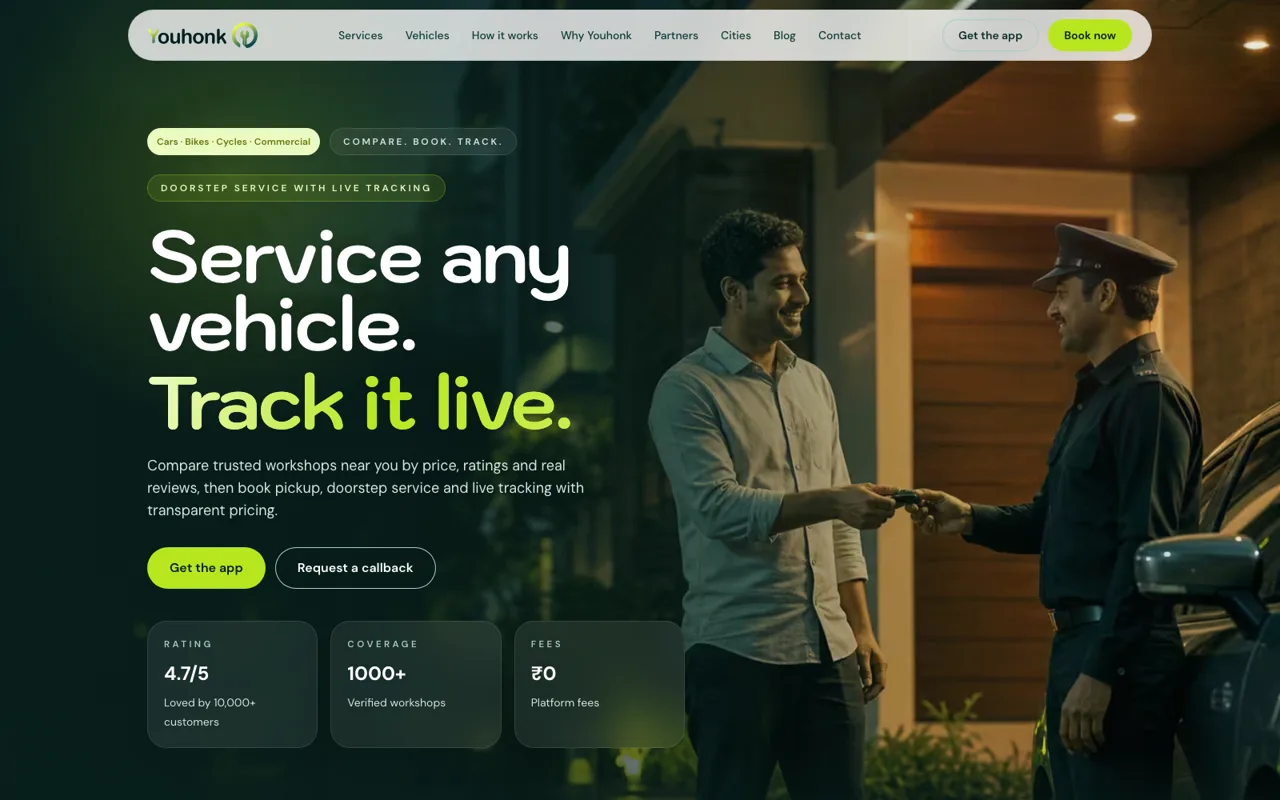
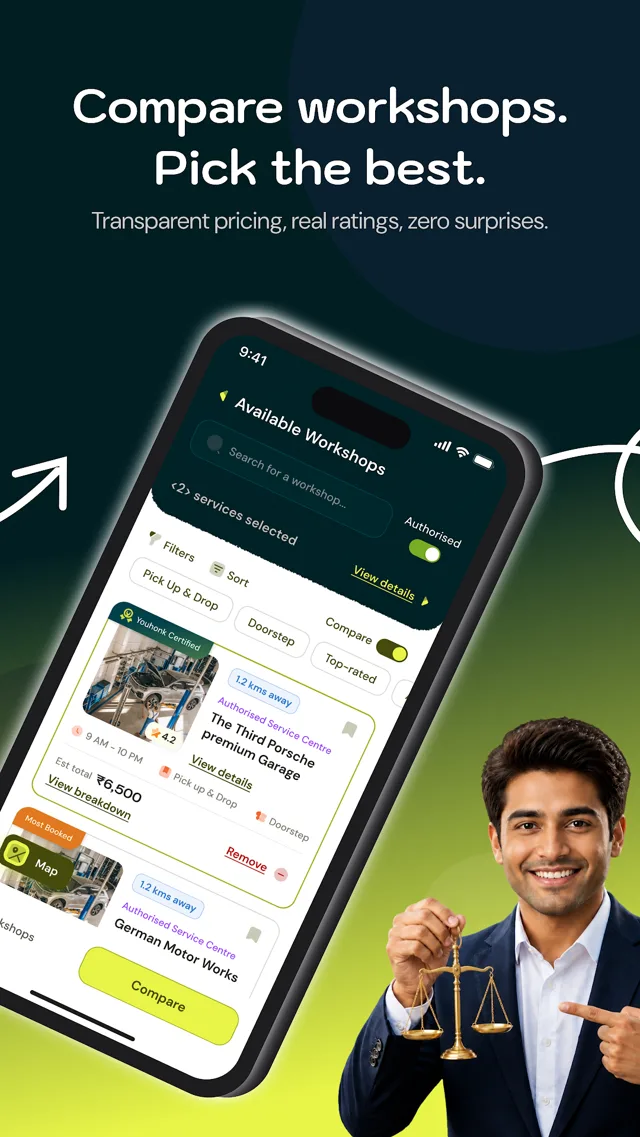
Youhonk has been booking vehicle services in Pune for years — cars, bikes, bicycles, commercial vehicles. A customer compares verified workshops on price, ratings and real reviews, books a pickup or doorstep service, and watches the vehicle move.
The platform underneath was built up over years by several teams. Script Lanes was brought in to modernize it — the apps people hold, the dashboard operations live in, the site that brings them in, and the data behind the catalog. Piece by piece, without breaking a single live booking.
The platform
Years of work were already running before we arrived.
The platform we walked into is a Laravel backend with 210 database tables and around 920 API routes. An order travels through 31 states — quotation and negotiation at one end, a full pickup and doorstep-return logistics leg at the other. Fourteen scheduled jobs keep the whole thing moving. Four roles share it: customer, workshop partner, admin, driver.
There is even a WhatsApp booking funnel — a complete 15-endpoint flow where a customer can register, add a vehicle, pick a workshop and place an order without ever opening the app. Over 10,800 commits since 2023, across every contributor who has touched it. That is the system we had to modernize while it kept selling.
The modernization
Modernize the parts people touch — one at a time.
Six surfaces, each on its own schedule, all still talking to the same Laravel API. Nothing was paused, forked, or thrown away. The apps went to the current React Native. The dashboard was rebuilt. The website was replaced. The catalog data was cleaned up and told to stop guessing.
Customer app
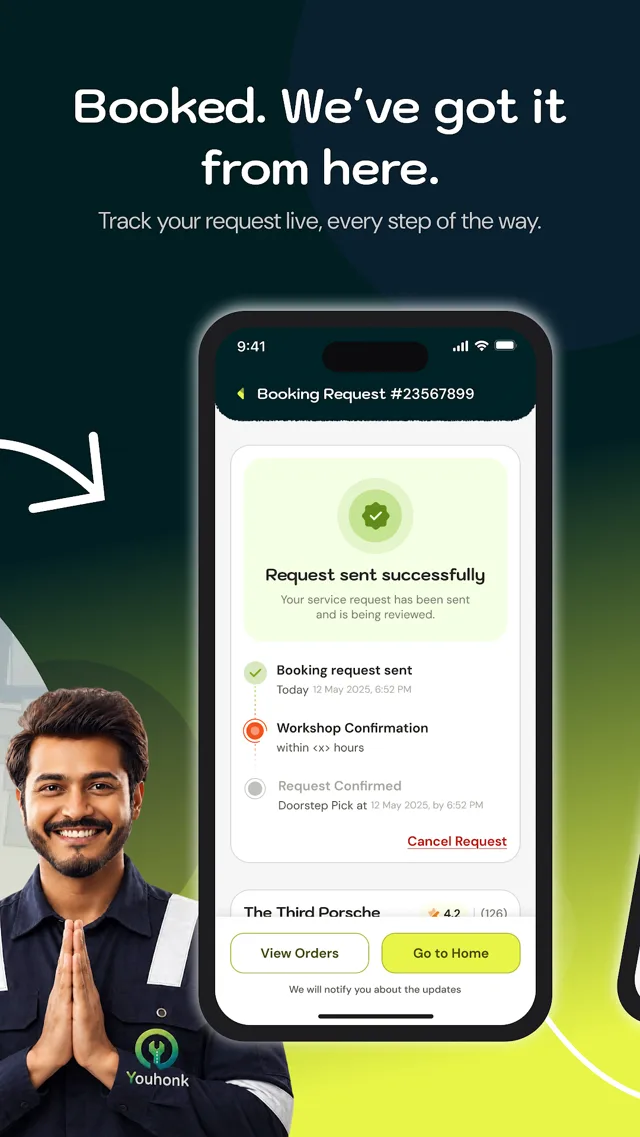
React Native 0.84 with the New Architecture enabled — current on the App Store and Play Store. Compare workshops, book, track.
Partner app
The workshop's own app — moved to React Native 0.85, the New Architecture, and Android 16KB page alignment.
Driver app
The pickup and drop leg, with a native iOS background-location module behind the live tracking customers watch.
Admin 2.0
A ground-up rebuild of the operations dashboard in Vue 3, Vite and PrimeVue — built against generated maps, not memory.
Website
A new marketing and SEO site on Next.js 16, fully static — fast pages that search engines can read.
Data pipeline
Tyre, battery and CNG catalog data — purged, flagged and enriched from real sources. Never invented.
The New Architecture, and a 16KB floor.
Newer Android expects apps to align to 16KB memory pages, and Google Play expects the same. We took the partner app to React Native 0.85 with the New Architecture on, then checked the work the only way that counts — the ELF load alignment of every native library in the bundle. Not a build flag we hoped had worked.
The rebuild started with a map.
Admin 2.0 was not rebuilt from memory. We generated the maps first: 157 frontend routes cross-referenced against 714 backend API calls, so every screen's real dependencies were on paper before anything moved. Then a 450-permission role system was retrofitted onto around 495 live admin routes — behind a feature flag, switched on when operations were ready.
A pipeline that refuses to guess.
Catalog data for tyres, batteries and CNG arrives from vendors, and some of it is wrong. The pipeline purges and flags suspect rows instead of patching over them, then enriches from real sources with a resumable scraper. The vehicle-to-tyre-size dataset runs to roughly 2,700 rows, about 96% populated — the rest left blank, never fabricated.
Live tracking that survives iOS.
The dot moving on the customer's screen is a driver's phone in traffic, screen off, app in the background. iOS is strict about that, so the driver app carries a native background-location module written for the job — the tracking keeps reporting when the phone stops paying attention.

The discipline
Modernizing a live system is a discipline, not a rewrite.
Every change lands on a platform that has customers on it right now. So the order is always the same: map it before you move it, flag it before you roll it out, and patch what you depend on instead of forking it.
Maps before changes.
Before a screen is rebuilt, we generate the map of what it actually calls — routes to endpoints, endpoints to tables. Guesswork is what breaks a system nobody is allowed to stop. The map is generated from the code, so it cannot go stale in a document.
Feature flags before rollouts.
The 450-permission role system shipped switched off. Operations turned it on when they were ready, on their own day — and if something had looked wrong, it goes back off in seconds rather than in a redeploy.
Patches maintained, never forked.
Some third-party libraries lag behind the New Architecture and the 16KB rules. Those carry a maintained patch set that travels with the app, so each upgrade is a re-check rather than a rescue. A fork is a bill you pay forever.
Boring, well-trodden, in production.
React Native · New Architecture · Vue 3 · Vite · PrimeVue · Next.js · Laravel · MySQL. Nothing here is new for the sake of new.
What the modernization moved
A platform running for years — and getting newer.
We didn't start Youhonk. We keep it current: the apps on the stores, the dashboard operations live in, the site people arrive on, the data the catalog quotes from. That is the result we want to be measured by.
React Native apps kept current
API calls mapped before rebuilding
Permissions retrofitted, feature-flagged
Catalog coverage — nothing fabricated
Want yours shipped like this?
Tell us what you have in mind. Within 48 hours you'll hear back with an honest plan, clear pricing, and friendly, straight answers.
Start a projectStart a project