


Most MVPs are not too small. They are first versions carrying three future roadmaps, two stakeholder wish lists and a dashboard nobody needs until there are customers to put on it.
An MVP is not a cheap final product. It is the smallest product that can answer an important question.
Start with the question the MVP must answer
An MVP exists to reduce uncertainty. Will customers complete this workflow? Will they pay? Can staff operate the process? Does the data exist? Can the risky integration work?
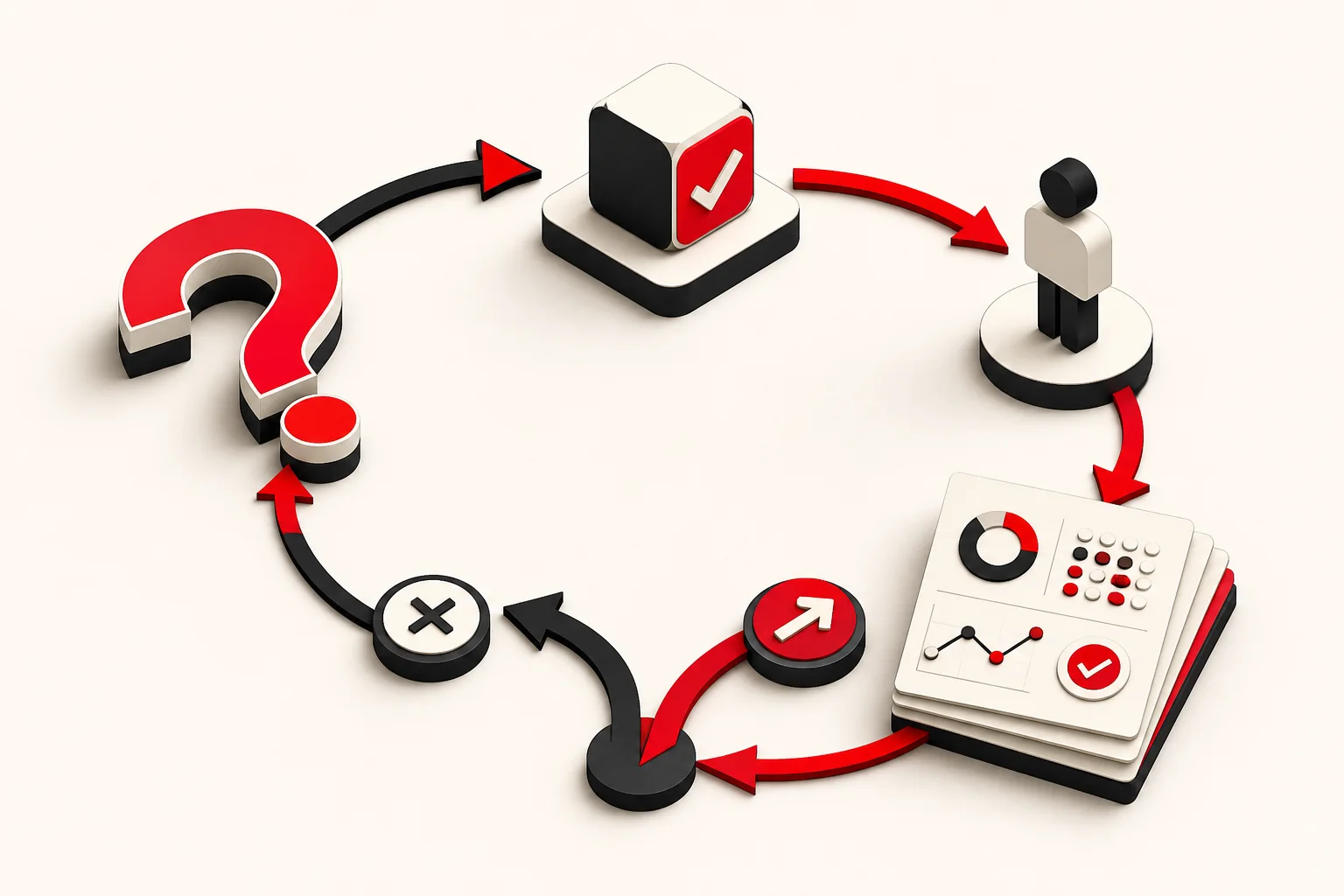
If the first version is not tied to a question you need answered, scope turns into a haggle over features instead of an experiment about the business.
Build one complete journey
A small product is not a collection of incomplete screens. It needs one user journey that works end to end. For a marketplace, that could be discover → request → pay → confirm. For a B2B workflow, submit → review → approve.
One finished journey is worth more than five half-built ones.
Manual is allowed
Teams automate too early because doing the work by hand feels like it will never scale. Early on, manual steps earn their keep. They show you the real process before anyone spends weeks baking assumptions into software.
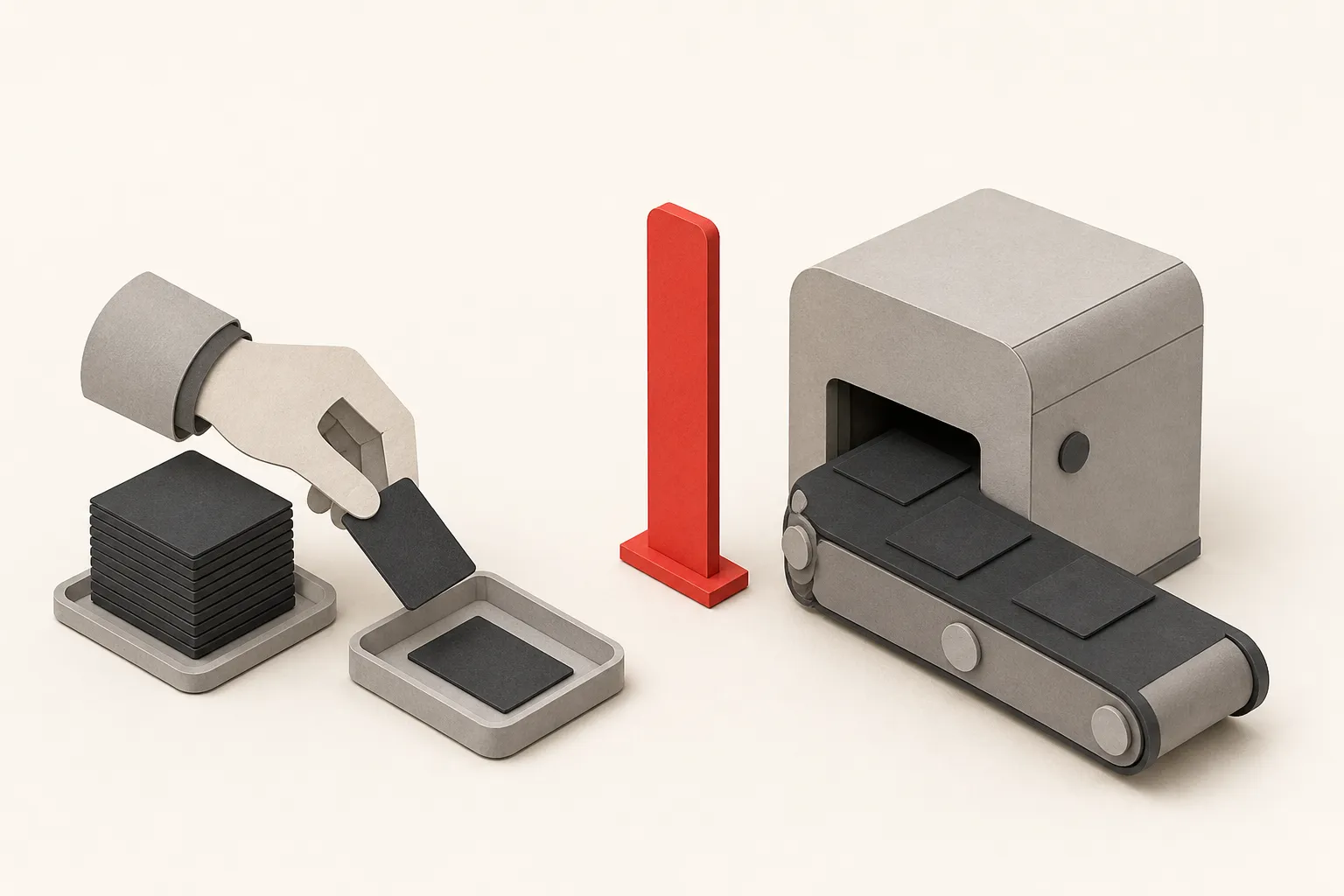
If an admin can manually reconcile twenty transactions a day, that may be a better first version than building a reconciliation platform before transaction twenty-one exists.
Do not build future-company features
Complex role systems, white-label configuration, advanced reporting, multi-region infrastructure and flexible workflow builders may all be sensible later. The question is whether the first users need them to prove the product.
Future flexibility has an immediate cost: more states, more testing, more design and more decisions.
Use a parking lot with dignity
Cutting scope is easier when nobody feels their idea has been killed. Keep a visible parking lot, and give each item a trigger. Add advanced roles when an enterprise customer asks for them. Automate reconciliation when volume passes an agreed number. Add self-serve configuration when operations becomes the bottleneck.
This turns ‘not now’ from an argument into a roadmap decision.
A smaller MVP gives better feedback
When the product is narrow, user behaviour is easier to interpret. If ten features launch together and adoption disappoints, you may not know which assumption failed.
Smaller releases shorten the gap between shipping and learning, and make changing direction cheaper.
Small is a strategy
The point of an MVP is not to impress anyone with a feature count. It is to get to evidence quickly, without signing up for things you cannot undo.
Build the smallest complete thing that can teach you something expensive to learn any other way.