


For years the search journey was simple: question → Google → ten links → website. Increasingly, it looks like question → AI → answer → sources → website. SEO is not dead. The search interface is changing.
AEO is not a secret hack to make ChatGPT mention your company. It is becoming a credible, useful, reference-worthy source.
SEO isn’t disappearing. The interface is.
Google’s 2026 guidance still emphasises foundational SEO — crawlability, indexing and useful content — while generative AI experiences change how people discover and evaluate information. So the real question is no longer only “Can we rank #1?” It is becoming: “When someone asks AI about the problem we solve, does our brand have a reason to appear?” That is where Answer Engine Optimization, or AEO, enters the picture.
Traditional search makes users compare results. AI search increasingly does the comparison for them. Someone asks, “What is the best CRM for a 50-person SaaS company?” and instead of opening ten websites, they may receive one synthesised answer containing recommendations, comparisons, pros and cons, sources, product mentions and links. Your brand can be discovered inside the answer before the user ever visits your website. That changes the game.
The eight things AEO asks of you
1. Answer the question in the first two or three sentences
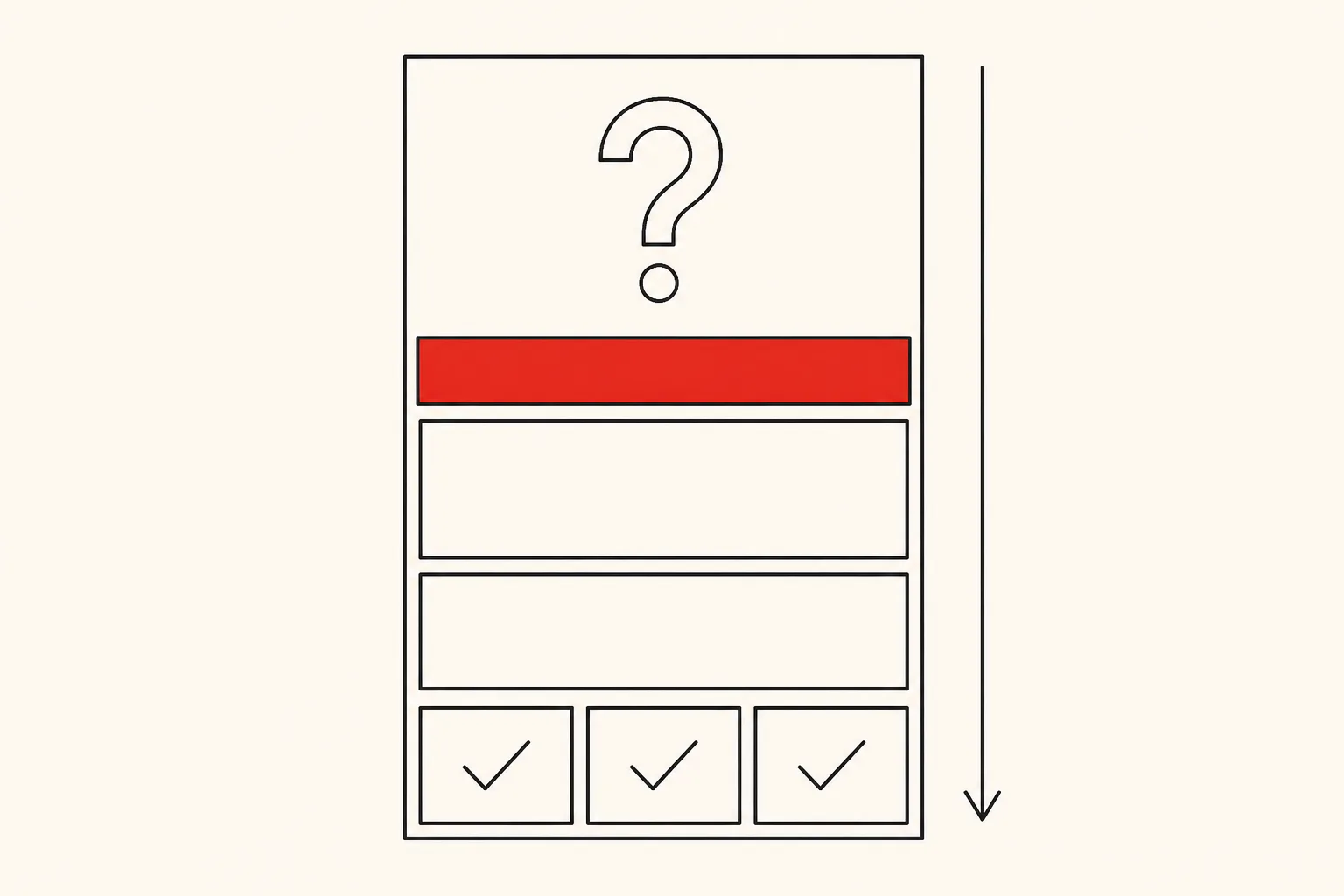
Don’t make people or search systems dig through 1,500 words to find the answer. Use a simple structure: question → direct answer → explanation → evidence. If someone asks “What is RAG in AI?”, explain RAG immediately, then show how it works, give examples and provide sources. The introduction should not be a 300-word warm-up. Quick win: audit your top 20 pages and check whether the primary question is answered within the first 100 words.
2. Build content around 50–100 real questions
Your customers already have questions. Your sales team hears them. Your support team hears them. Your founders hear them. Turn those questions into content: What is X? How does X work? X vs Y. Is X worth it? How much does X cost? What are the limitations? What mistakes should you avoid? Instead of publishing 100 random blogs, build 10 strong topic clusters with 10 useful questions each. That gives you 100 purposeful questions rather than 100 disconnected articles — and a much stronger information architecture.

3. Add original data
This is where generic SEO content starts losing its advantage. Anyone can write “AI is transforming businesses.” Far fewer companies can publish “We analysed 500 customer queries and found that 37% were caused by inefficient internal search.” Original information is harder to copy: surveys, benchmarks, experiments, industry reports, customer insights, internal datasets, case studies, performance comparisons. A useful rule is simple: don’t just explain what the industry knows. Publish something the industry doesn’t know yet.
4. Create 10–20 reference pages
Every company should have pages that answer the most important questions in its category: definition + process + examples + data + FAQs + sources. Aim for 10–20 strong reference pages, not dozens of thin articles. These shouldn’t be 500-word SEO pieces. They should become resources people actually reference.
5. Become extremely clear about who you are
AI systems need context. So does Google. So do humans. Your website should make six things obvious: who you are, what you do, who you serve, what problems you solve, where your expertise lies and what evidence supports it. Your homepage, about page, author bios, case studies, social profiles and third-party mentions should tell a consistent story. If your website says one thing, LinkedIn says another and directory listings say something completely different, you’re creating unnecessary ambiguity.
6. Make your content easy to understand and crawl
AI search does not eliminate technical SEO — it makes good technical foundations even more important. Check indexability, internal linking, page structure, headings, metadata, structured data, canonicals, mobile experience, page speed, robots.txt, the XML sitemap and broken links. Then look at content structure: use H1 → H2 → H3 → answer → evidence → example, not fourteen paragraphs, a random heading and the answer buried somewhere near the bottom. Make your content easy for both humans and machines to process.
7. Build comparison content
AI search is increasingly useful during decision-making, which means comparison queries matter: X vs Y, X alternatives, best X for Y, X pricing, X limitations, when not to use X. But don’t turn these into disguised sales pages. If you claim “our product is better,” explain why using data, benchmarks, features, limitations, use cases, pricing and real examples. Credibility increases when you’re willing to explain where your product isn’t the best fit.
8. Make your claims verifiable
AI-generated answers are only as useful as the information behind them. So don’t write “90% of companies are using AI” without explaining where that number came from. Use claim → source → context → date. For important statistics, include the original source, publication date, methodology where available and a link to the research. Don’t manufacture authority. Document it.
Seven tricks you can start this month
- Turn sales calls into content. Collect the top 20 questions prospects ask and turn each into a useful page. You already paid for the research — it happened in your sales conversations. Use it.
- Create a “best answer” page. Pick one important industry question and build the best resource you possibly can around it — definition + data + examples + expert opinion + FAQs + sources — then improve it every quarter.
- Add quick-answer sections. For important pages, start with a concise answer before going deeper. It helps users understand the page immediately and creates clearer information structures.
- Publish one original study per quarter. You don’t need a research department. Start with one survey → 100 respondents → five insights → one report → ten content pieces. One research project can become an entire content ecosystem.
- Build topic clusters. Instead of 50 disconnected blogs, create one pillar page plus 8–12 supporting pages and connect them with internal links. Topical depth beats isolated keyword targeting.
- Refresh your top 20 pages. Don’t always create new content. Update statistics, examples, screenshots, sources, FAQs, internal links and outdated claims. Sometimes updating 20 strong pages is more valuable than publishing 50 weak ones.
- Track mentions, not just rankings. Traditional SEO dashboards focus on rankings → traffic → clicks. AI search adds another layer: mentions → citations → recommendations → referral traffic. Your brand can influence a buying journey even when the user doesn’t click your website immediately.
The biggest AEO mistake
Here’s what not to do: “AI search is coming. Let’s publish 4,000 articles this month.” That’s not a strategy. That’s content spam with a deadline. More pages do not automatically create more authority — in fact, Google’s guidance warns against producing large volumes of content primarily to manipulate search rankings or generative AI responses. The objective isn’t more content. It’s more useful information.
You also don’t optimise for AI by writing like AI. You don’t need every paragraph to sound like a perfectly structured robot wrote it. You need to become a source worth referencing: say something original, show your expertise, support important claims, publish evidence, keep your information consistent, answer real questions and create information others cannot easily reproduce. The goal isn’t to trick an answer engine into mentioning you. It’s to become the kind of source that deserves to be mentioned.
SEO → AEO → brand authority
Think of search visibility as three layers. SEO makes your information discoverable. AEO makes your information useful for answer-driven search. Brand authority gives people and AI systems a reason to trust and reference you. Together: discoverable → useful → trusted. That’s the real evolution.
Your 30-day AEO action plan
Don’t try to transform your entire website overnight. Start with a 30-day sprint. In week 1, find 20 customer questions, 10 comparison queries, 10 high-value keywords, 5 competitor content gaps and 5 topics where your company has genuine expertise. In week 2, create five answer-focused pages, two comparison pages and one strong pillar page, then improve author and company information and internal linking. In week 3, add original data, expert opinions, case studies, customer examples, sources and FAQs. In week 4, track organic impressions, organic clicks, branded searches, referral traffic, content engagement, AI-generated mentions where measurable, citations and leads influenced by content. Then repeat. Twelve months of this is far more valuable than 12,000 AI-generated articles.
The new search competition
The old question was “Can we rank #1?” The new question is “When someone asks an important question in our category, are we part of the answer?” That is a much bigger strategic challenge. Search visibility is no longer only about winning a position on a results page; it’s increasingly about becoming part of the information layer AI uses to construct an answer. So yes — optimise for AI search. But don’t optimise for the machine. Build something the machine has a reason to trust. That’s the real shift from SEO to AEO.
Perhaps the most important metric isn’t “Did AI mention us?” It’s “Did we become the source worth mentioning?”