


Agile becomes unhelpful when the team performs the ceremonies perfectly and still cannot explain what will be demonstrated on Friday. The useful parts are feedback, prioritisation and adaptation — not calendar choreography.
Keep the feedback loop. Remove the ceremony that cannot explain its job.
Agile is a goal, not a meeting schedule
Agile methods started with a simple idea: ship something useful, get feedback, adjust the plan, and keep the business and the engineers close. Over time teams collect rituals until ‘being agile’ means attending all the expected meetings.
Each ceremony — stand-up, planning, review — should exist because it solves a coordination problem. If nobody can name that problem, the meeting has become institutional furniture.
Keep a visible priority order
Teams work better when there is one clear answer to ‘what matters next?’ Call it a backlog, a queue or a roadmap slice. The name matters less than making the trade-offs visible.

A 400-item backlog sorted by the date tickets were created is not prioritisation. It is storage.
Keep short planning horizons
Long-term direction matters. But the further out a detailed plan reaches, the less it can be trusted. We keep the next few weeks specific and leave later work deliberately rough.
The team can then commit to the next useful slice, without pretending to know what users will say six sprints from now.
Keep demos and retrospectives — if they change behaviour
Demos put working software in front of the people who asked for it. Retrospectives help when they end with one or two things to try — not with a recurring list of feelings nobody revisits.
If a retrospective action has survived on the board for four months, it has achieved immortality, not improvement.
Do not worship velocity
Story points — the rough sizes a team puts on its own work — can help that team judge how much it can take on. They turn harmful when someone reads them as a productivity score, or compares them between teams.
Velocity is only the points finished per sprint, so a team can raise it by estimating more generously without shipping one extra useful thing. Watch outcomes, cycle time, quality and predictability alongside any planning number.
Use stand-ups for coordination, not reporting to management
A daily sync earns its place when people need to hand work over and unblock each other. It stops earning it when fifteen people take turns reciting yesterday’s tickets to a project manager.
If the tracker already says all of it, and nobody acts on the spoken version, shorten the meeting.
The practical version
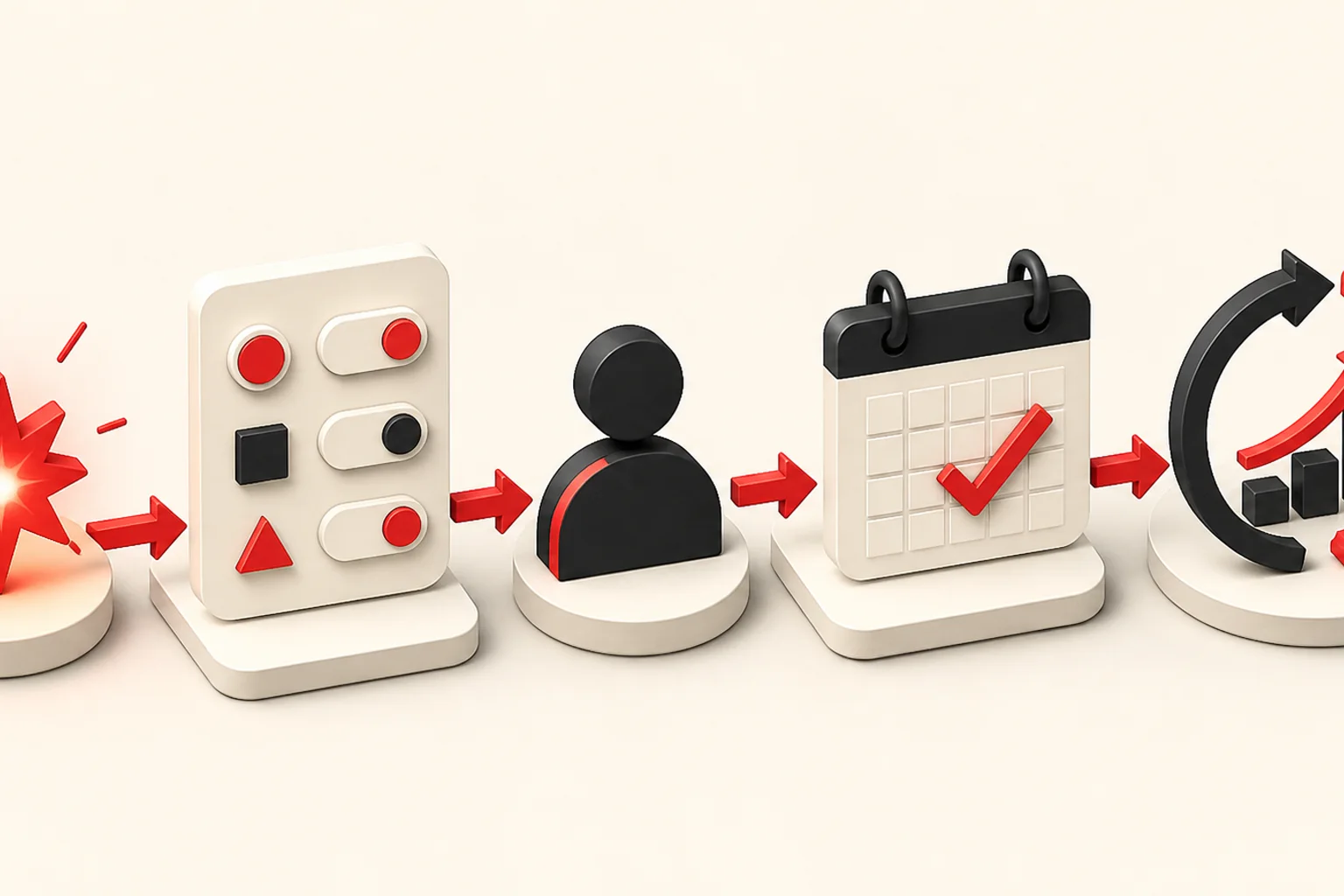
Prioritise one queue. Plan a small slice. Build. Show working software. Discuss what changed. Improve the process. Repeat.
That is enough agility for many product teams. Everything else should earn its place.